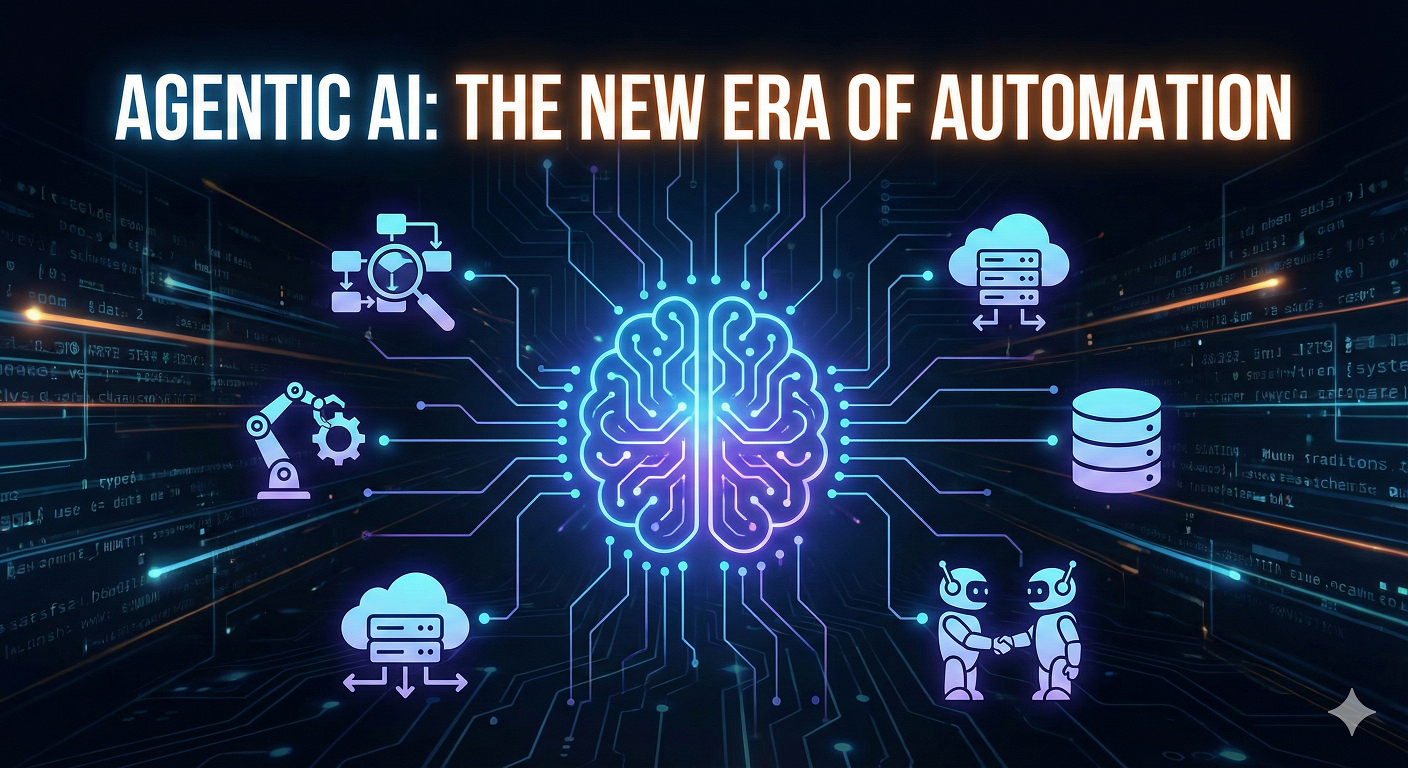
Agentic AI: The New Era of Automation
February 9, 2026
Agentic AI: The New Era of Automation
The Artificial Intelligence ecosystem is evolving rapidly. Users are quickly learning that the strategic integration of AI's various capabilities into holistic solutions is the key to unleashing the full power of the technology. This is where AI Agents and the concept of Agentic AI come into play.
If you've wondered what sets these agents apart from traditional AI and why they are changing the rules of the game, in this post we break down the key points explained by IBM Technology.
What Makes an AI Agent Different?
Unlike traditional AI models, which are fundamentally reactive and predictive (they wait for an input to provide an output), AI Agents have unique characteristics that make them much more powerful:
Initiative: They don't just wait for orders; they act proactively.
Goal-driven: They work to achieve a specific goal.
Context-aware: They understand the environment in which they operate.
Memory: They maintain short and long-term memories to learn, reflect, and adjust future behavior.
Planning: They are capable of designing complicated multi-step workflows.
The "Superpower": Interact and Execute
The real magic happens when these agents move from planning to action. They have the ability to interact within a software ecosystem (or "metaverse") to execute the work.
An agent doesn't work in isolation; it can connect with:
APIs and Applications: To interact with customer applications or external services.
Databases: To retrieve or store critical information.
Cloud Resources and Hardware: From running models in the cloud to interacting directly with the firmware of AI accelerator cards.
Other AI Agents: Perhaps most fascinating is their capacity to collaborate. An agent can take their task and communicate with other pieces of the ecosystem to get their task done.
Benefits of Agentic AI
The complexity of combining different AI models, software, and hardware is a major hurdle in current technological infrastructure. Agentic AI helps automate this puzzle, autonomously assembling the pieces to form more useful solutions.
This translates into:
Higher accuracy in decision making.
Lower operational costs and overhead.
Increased productivity of both the team and the AI solution itself.
A Real-World Example: Insurance Processing
To illustrate this, let's imagine an insurance company modernizing its claim process. Instead of a static script, a Claim Agent could orchestrate the entire process:
Planning: The agent receives the data and devises a plan: parse the information, validate the policy, analyze damage images, detect fraud, and audit the process.
Intelligent Execution:
It sends the text to an NLP model in the cloud to understand the claim.
It uses an LLM (Large Language Model) on specialized hardware to check the policy.
It sends photos of the accident to a bank of GPUs to process the images.
It utilizes optimized firmware to detect potential fraud.
Specialization: When contacting the client, the Claim Agent could delegate this task to a Client Interaction Agent, whose skills are optimized for communication and handling user applications, ensuring more effective interaction.
Conclusion
Terms like "Agentic AI" and "metaverse" might sound mysterious on the surface, but by breaking the concept down into components that plan, interact, and collaborate, we can see how this technology doesn't just solve problems, but transforms the way we build digital solutions.
The future of AI is not just thinking, it's acting.
Blog

Artificial Intelligence in Business: Beyond the Hype
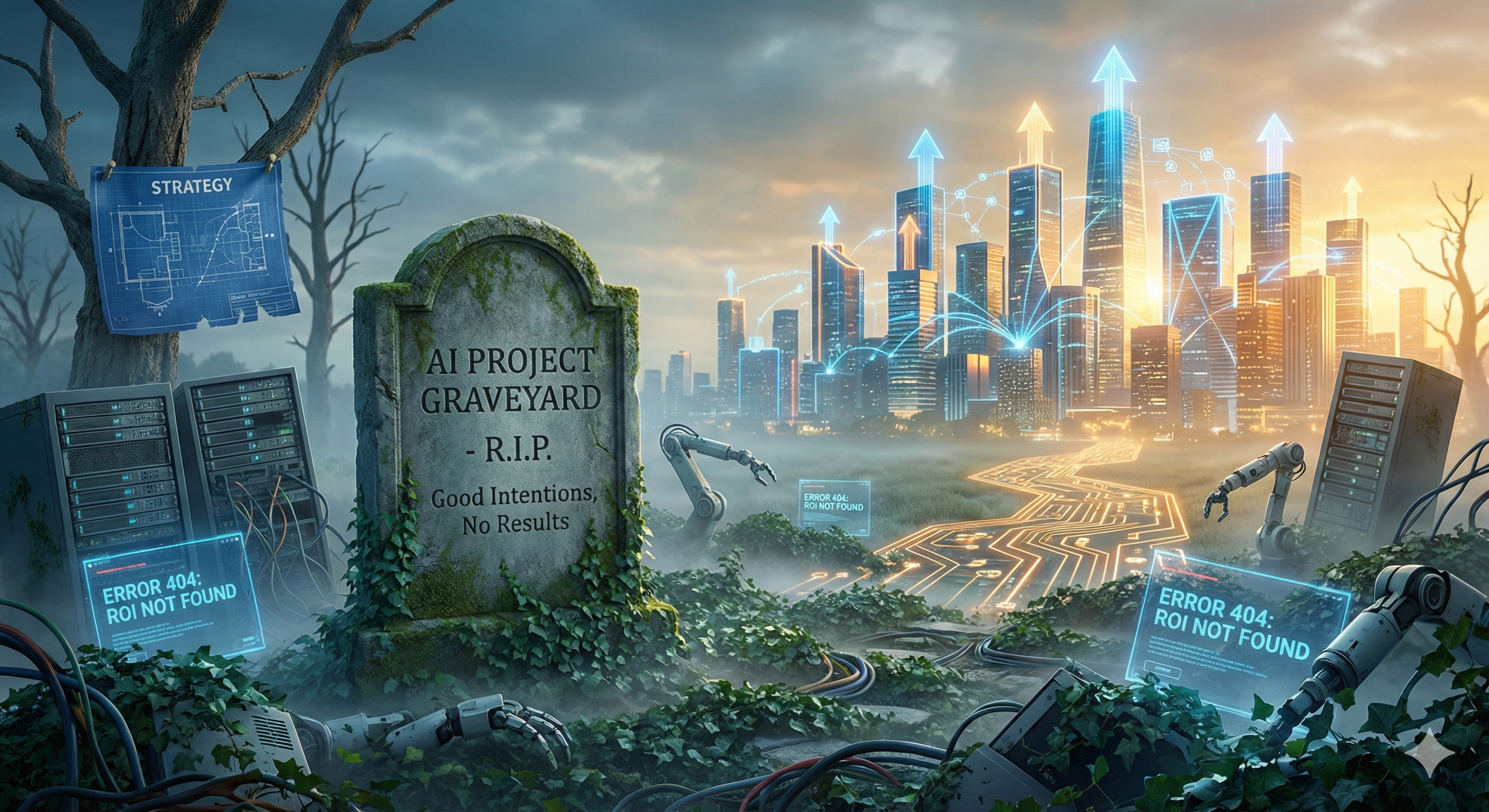
Why Most AI Projects Fail (and How to Ensure Yours Delivers Real ROI)

Artificial Intelligence for elevate human talent
Start your Project
Tell us about your needs and how we can help you.